September 10, 2026
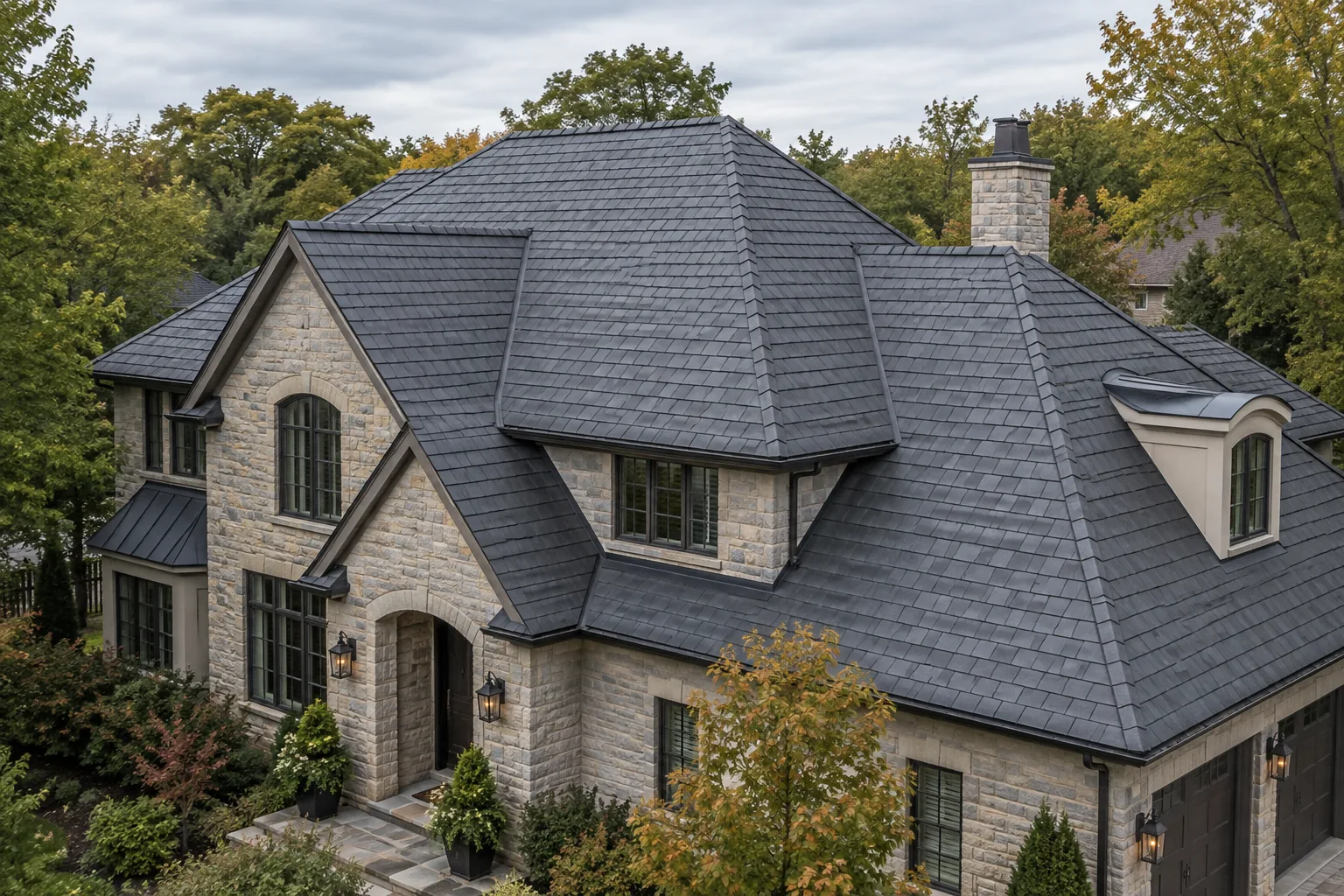
Illustrative image generated with AI; not an actual UV Exteriors project or an exact manufacturer product.
A DaVinci roof is worth a closer look when the texture of slate or cedar is a major part of the home you want to create. The decision is bigger than choosing a tile color: roof shape, the existing deck, flashing, installation details, and future care all belong in the comparison.
UV Exteriors installs synthetic slate and shake as part of our Chicagoland roofing services. Our South Barrington DaVinci project, completed in 2023, gives you a real finished roof to examine alongside samples. This guide explains how to turn that inspiration into a clear replacement plan.
DaVinci Roofscapes makes manufactured roofing with slate and shake appearances. These are alternatives to natural stone and cedar, not asphalt shingles with a different color. Product families differ in tile shape, width, exposure, color choices, and installation requirements.
Ask for the full product name in the estimate. “DaVinci roof” identifies a manufacturer, but it does not tell you which profile is being ordered or how the courses will be arranged. A sample should match the product, finish, and blend on the selection sheet.
A slate-style roof emphasizes individual tile outlines and a stone-like surface. It is worth considering on a home with prominent roof slopes, masonry, or architectural details that you want the roofing to complement. Compare the width pattern and lower tile edges from the street, where you will usually see the finished roof.
The South Barrington gallery shows the texture across a complete installation. Use it to judge the overall effect, then compare current samples for your own project. The gallery does not identify every product specification, so we would not use it to promise a particular color blend or performance rating for another roof.
A shake profile creates a different rhythm, with a wood-inspired surface rather than a stone pattern. If you are replacing cedar, put the new sample beside the siding, brick, and trim that will remain. Decide whether you want to preserve the home's existing character or deliberately change it.
Look at more than one tile. Ask to see how the selected widths and colors work together over several courses. A small swatch can help narrow a palette, but it cannot show the full pattern of a large roof.
Start with what you value about the original material. If the stone itself or natural wood variation is essential to the design, a manufactured look-alike may not meet that preference. If your priority is the appearance with a different material and care routine, synthetic roofing deserves a place on the shortlist.
Still narrowing the material category? Our roofing material guide puts these choices in context. If you have already selected composite roofing and are comparing manufacturers, use our separate DaVinci and Brava comparison.
Before selecting the covering, have the roof assessed for suitability. The proposal should account for the slope, supporting deck, existing layers, and any areas that need a different roofing system. A shallow porch roof may need a different approach from the main pitched roof.
When an old roof comes off, concealed damage or unsuitable decking may become visible. Agree on how those conditions will be photographed, priced, and approved. That discussion is more useful before removal than after the crew finds a problem.
Chimneys, valleys, skylights, walls, and roof edges interrupt the tile surface. Ask which flashing is being replaced, how retained details will be assessed, and which underlayment and ice-and-water protection the chosen system requires. The roof covering and these connections must work together.
Chicago-area snow and temperature swings also make attic conditions and roof-edge drainage relevant. Include intake and exhaust assessment where appropriate to the attic design. New tiles alone do not diagnose an ice-dam or moisture problem.
The engineering report published by DaVinci lists UL 2218 Class 4 impact resistance for the evaluated roofing materials. It also makes clear that fire classifications and wind performance depend on assembly details and installation conditions. Have the current documentation matched to the exact product and proposed roof.
Impact-resistant does not mean hail-proof. Avoid treating a laboratory classification as a promise that no storm can damage the roof, or as an automatic insurance discount.
A square-foot figure without a defined scope can hide the largest differences between estimates. Ask contractors to price the same product and the same work before comparing totals.
If two totals differ substantially, first look for a different product, omitted flashing, or an allowance for repairs. Ask which selections are optional upgrades and which work is required for the proposed installation. We provide project-specific estimates instead of presenting an unsupported price range as a quote for your home.
Review the roof alongside permanent features: brick, stone, window frames, and existing metalwork. Take samples outside and compare them in daylight. View a roof photo at a similar angle to your house rather than relying only on a close-up tile image.
If your neighborhood has an architectural review process, obtain the applicable approval before ordering. Keep the approved product, color, and supporting documents with your contract. The selection sheet should also identify the visible ridge, valley, and flashing finishes so those details do not become last-minute decisions.
Even when you choose a manufactured alternative to wood or stone, the roof still needs attention to debris, drainage, flashing, and damage. Ask for the selected product's care instructions and a safe process for arranging inspections. Avoid climbing onto the roof to investigate a concern yourself.
Read the manufacturer warranty separately from installation coverage. Ask who handles a service request, what documentation to retain, and whether registration or transfer requirements apply. A warranty term is not a predicted lifespan, and another manufacturer's coverage does not transfer to a DaVinci installation.
It can be considered as an alternative, but the deck, slope, and installation requirements need review first. Include any preparation needed to change roofing systems in the estimate.
Judge the visible roof area and scale of the tile pattern. Compare samples and complete-roof photos with the proportions of your home. A complex pattern is not automatically the best choice for every exterior.
Yes. The South Barrington project linked above shows a completed slate-style roof. Bring the details you like to your consultation so we can discuss the appropriate product and layout for your property.
Request a DaVinci roofing estimate to discuss your roof, preferred profile, and complete installation scope. UV Exteriors is based in Schaumburg and serves Chicagoland homeowners.
Planning an out-of-pocket replacement? Ask about our $1,500 off + free gutters offer for qualifying roof/siding projects. Eligibility, gutter scope, and applicable conditions will be confirmed in your written estimate. Do not assume other promotions can be combined.